
Build a gratitude habit, privately.
The good moments are easy to forget.
A normal day buries the small wins under everything urgent and unfinished. Unlooped gives you a quiet, private place to notice them before they slip past.

How Unlooped helps
Jot three good things
Each entry is quick: name three specific things that went well today. Unlooped keeps them in one calm place that is yours alone.
Train your attention
Logging the good on a regular cue gently shifts what your mind looks for. This is a general wellbeing pattern, not a medical claim.
Anchor it to your day
Tie your entry to your morning coffee or the moment before bed, so the habit rides a routine you already keep.
Kept behind Face ID
Your reflections stay on your iPhone. Lock the gratitude habit behind Face ID so nobody else can open it.
Why noticing good things shifts your attention over time
Your attention is selective by design. Across a normal day your mind filters a flood of input and fixes on what feels urgent or unfinished, which usually means the problems. A gratitude practice works in the other direction. When you regularly stop to name what went well, you give your attention repeated practice at spotting the good, and over weeks that search can start to feel a little more automatic. This is a general wellbeing pattern, not a medical treatment, and it does not replace care for anxiety, low mood, or anything a professional should look at.
Unlooped keeps the practice small enough to actually repeat. There is no public score to optimize and no audience to perform for, just a quiet place to log a few good things and watch the entries add up. Because the habit is milestone-based, the value lives in returning to it often, not in writing something profound. A short, honest list most days does more for your attention than a beautiful entry once a month.
The three-things practice, kept specific
One of the most durable versions of this habit is also the simplest: write down three good things from your day. The format is forgiving, but it works best when you keep the items specific. "My friend texted to check on me after the interview" lands differently than "good friends." Specific entries are easier to actually feel, and they keep the practice from collapsing into the same vague list every night. If three feels like a stretch on a hard day, one real thing is plenty.
Specificity also makes looking back worthwhile. When your entries name actual moments, people, and small wins, scrolling your own history reads like evidence rather than a slogan. Unlooped stores each entry exactly as you wrote it, so months later you can revisit a genuinely good week in your own words. The goal is not to manufacture positivity or to ignore a bad day, just to make sure the good moments get recorded instead of forgotten.
Anchor it to a cue you already have
A new habit survives when it leans on an existing one rather than on willpower. Pick a cue that already happens every day and attach your gratitude entry to it. "After I pour my morning coffee, I write three good things." "Before I put my phone down for the night, I note what went well." The existing routine does the remembering for you, so you are not relying on motivation that comes and goes.
Morning and night each have their own pull. A morning entry can set the tone before the day's noise arrives, while a before-bed entry lets you close the day on what went right instead of on the open tabs in your head. There is no single correct time; the best one is the cue you will actually keep. Unlooped sends a gentle reminder if you want it, then gets out of the way, because the habit belongs to your routine, not to a notification.
A private practice, and a missed day is just data
Gratitude entries are personal. They name the people you love, the things you worry about, and the small mercies you might never say out loud, so they deserve to stay yours. Everything you write in Unlooped lives on your iPhone. There is no account to create and no server quietly keeping a copy, and you can lock the gratitude habit behind Face ID so it does not open even if someone else is holding your phone. We genuinely cannot see what you write.
That privacy also takes the pressure off. Since no one is watching, a missed day is simply a data point, not a failure that erases your progress. Unlooped is milestone-based, so skipping a night does not wipe your history or reset you to zero; you just pick the practice back up at the next cue. Seeing which days you tend to skip is useful information, not a verdict, and the honest record stays where it belongs, on your phone and nowhere else.
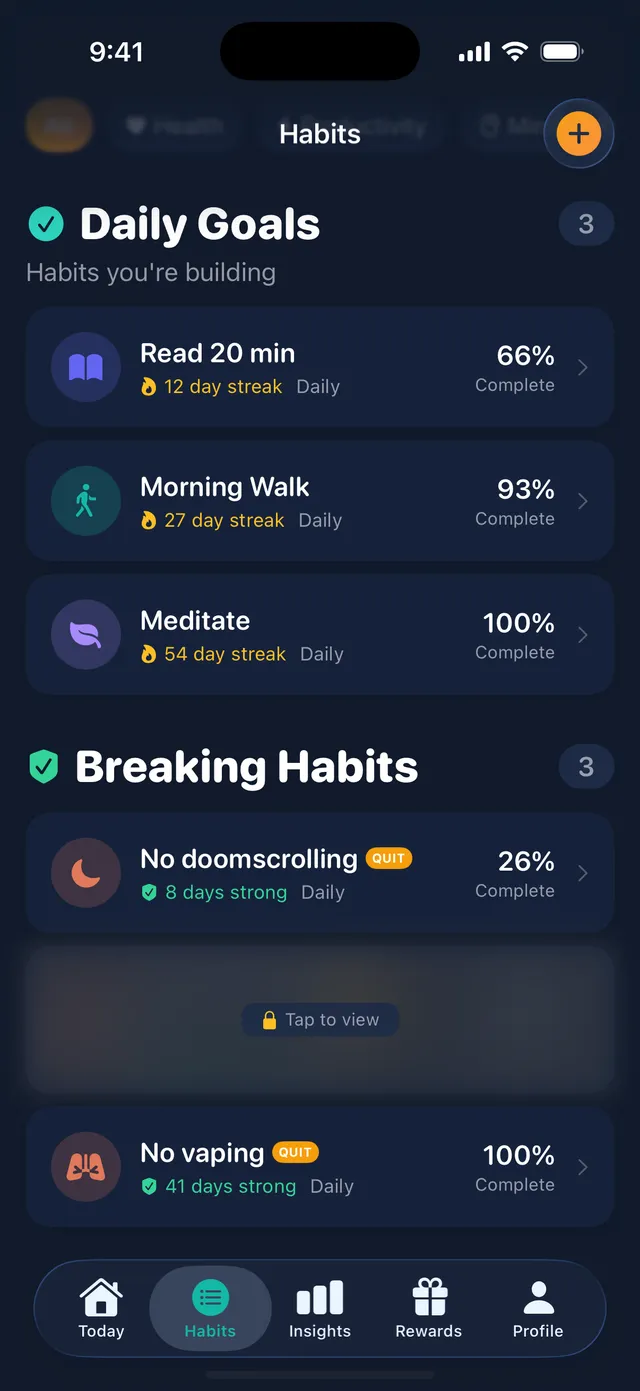
This is personal. We get it.
A gratitude journal only works if you are honest in it, and honesty needs privacy. Unlooped keeps every entry on your iPhone, with no account to sign up for and no server keeping a copy you cannot see. You can seal the whole gratitude habit behind Face ID, so even a borrowed or unlocked phone will not open your reflections. The optional iCloud sync is private and encrypted to your account, and nothing is ever sold, shared, or scanned for ads. The people, worries, and small wins you write about stay between you and your phone, which is exactly where a practice this personal should live.
Gratitude: frequently asked questions
Related guides
Practical, judgment-free reading on gratitude and the habits around it.
Best habit tracker for a gratitude practice
Building a gratitude practice isn't about perfection. It's about noticing what matters, even on hard days. Most habit trackers punish you for missing a...
How to build a gratitude practice
Gratitude sounds simple until you try it. Your brain resists. It wants to scan for threats, not gifts. You forget to practice. When you do remember, it...
Start today, privately.
Download Unlooped and take control of your gratitude journey.