
Make your new language a daily habit.
The hardest part of a new language is not the grammar, it is showing up tomorrow.
You start with a burst, binge a weekend of lessons, then a busy week quietly undoes it. Restarting feels heavier every time, and the vocabulary fades faster than it went in. Unlooped helps you protect ten small minutes a day and watch the practice days stack into something real.

How Unlooped helps
Count every practice day
Mark the day done whether it was a full lesson or ten minutes of flashcards on the couch, and watch the count climb toward your next milestone.
Reminders tied to your routine
Set a gentle nudge for the commute or the morning coffee, so practice attaches to a cue that already happens every day.
Miss a day, keep everything
A skipped day is a data point, not a punishment. Your history and milestones stay intact, so you pick up right where you left off.
A coach for the flat weeks
Talk through a plateau or a packed schedule with an AI coach that runs entirely on your phone, nowhere else.
Why ten minutes a day beats a weekend binge
Languages are built out of thousands of small encounters, and memory rewards how often those encounters happen more than how long any single one lasts. A four hour Saturday session feels heroic, but most of what you crammed starts fading before the next weekend arrives, so you spend the following binge relearning instead of advancing. Ten focused minutes a day works the opposite way: you meet the same words and patterns again before they slip, your ear stays tuned between sessions, and the language begins to feel like part of your day rather than an event you have to gear up for. With languages, frequency beats volume, and consistency is close to the whole game.
Unlooped is built for exactly this rhythm. Each day you practice, you mark it done, and the day count climbs toward your next milestone. The bar is deliberately low and deliberately daily: ten minutes on the couch counts the same as an hour with a tutor, because the habit you are protecting is the showing up. A home screen widget keeps the check-in one tap away, and the Apple Watch app means even a chaotic day can end with the box quietly ticked. Over a month, that small daily yes becomes the most reliable part of your study routine.
Attach practice to a cue you already have
The easiest way to practice daily is to stop deciding when. New habits attach fastest to something that already happens every day without effort: the commute, the first coffee, the kettle boiling, the quiet stretch after dinner. This is often called habit stacking, and it works because the cue does the remembering for you. Coffee lands on the table, phone comes out, lesson starts. There is no willpower negotiation, no waiting for a free evening that never arrives, and no morning spent wondering whether today counts as too busy. The existing routine carries the new one until the new one can stand on its own.
Unlooped helps you hold that pairing in place. Set a gentle reminder for the moment your cue usually happens, 7:40 on the train platform or 6:15 beside the coffee, and the nudge lands exactly when acting on it is easiest. Logging takes seconds, so it never competes with the practice itself. In the early weeks the reminder does the heavy lifting; after that, the coffee alone will make your hand reach for the lesson, and the app's job shrinks to what it does best, keeping an honest record of a habit that now runs by itself.
Track the showing up, not the app of the day
Most language learners change tools constantly, and that is healthy. Flashcards carry you through the first thousand words, then podcasts take over on the commute, then a weekly tutor or a subtitled series does what drills cannot. The method should evolve as you do. What must not change is the practice itself, which is why it helps to separate the two: let the tools rotate, and track the constant underneath them. Unlooped is method-agnostic on purpose. A day counts because you practiced, not because a particular app said so, which means switching tools never resets anything or scatters your history across services.
The other thing Unlooped deliberately leaves out is an audience. There are no public leaderboards, no league to slide down, and no classmates watching your pace, because Unlooped has no community feed and no sharing at all. Your streak is a private agreement between you and tomorrow. Reminders arrive as nudges rather than guilt trips, and a quiet week shows up in your log as information, not as a public demotion. For a skill that involves this much fumbling out loud, practicing without spectators is not a missing feature. It is the point.
Plateaus are normal, and the log proves you are moving
Early progress in a language is loud. Every week brings words you did not have before, and the gains announce themselves. Then somewhere past the beginner stage the curve seems to flatten: sessions feel identical, conversations still stall, and it is tempting to conclude you have stopped improving. This intermediate plateau is a stage nearly every learner walks through, not a verdict. Much of the growth at that point is consolidation, the slow knitting together of things you half know, and it is real even when it is invisible from inside any single practice session.
This is where a log earns its keep. When motivation dips, your Unlooped history is the counterargument: 140 practice days, milestones stacked up over months, and notes from your first weeks that now read as almost embarrassingly easy. Progress in Unlooped is milestone-based, so a missed day or a flat month never wipes what you have built; the record simply keeps accumulating alongside you. On the days the language feels stuck, you do not have to trust a feeling. You can open the app and look at the evidence, and evidence is a steadier thing to lean on than mood.
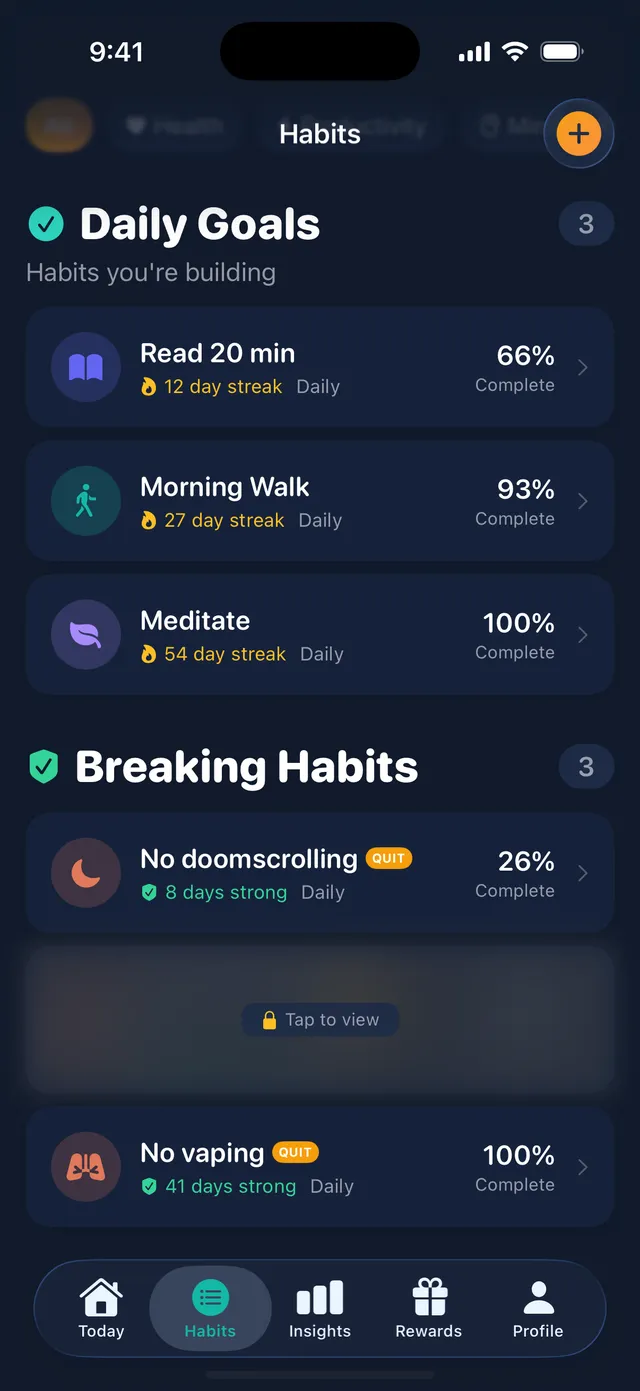
Your progress stays yours.
Practicing a language involves a lot of fumbling, and nobody needs an audience for that. Maybe you are learning for a move you have not announced, for someone you love, or for a heritage language that feels personal. Whatever the reason, your practice log, your streaks, your notes, and anything you say to the on-device coach stay on your iPhone. There are no accounts to create, no servers storing your history, and no leaderboard broadcasting your pace to strangers. If you want the habit fully out of sight, a Face ID lock hides it even on an unlocked phone. The optional iCloud sync is private and only moves data between your own devices. We cannot see what you track, by design.
Language learning: frequently asked questions
Related guides
Practical, judgment-free reading on language learning and the habits around it.
Best habit tracker for language learning
Learning a new language takes showing up, even when progress feels slow. The right habit tracker won't guilt you for missing a day or turn your journey...
How to build a language-learning habit
Learning a new language is genuinely difficult. Your brain resists repetition without immediate reward, motivation fluctuates, and consistency feels...
Start today, privately.
Download Unlooped and take control of your language learning journey.