
Build a better sleep habit, privately.
Good sleep starts with a schedule, not a struggle.
You do not need a perfect night to make progress. Unlooped helps you build a steady sleep schedule one consistent day at a time, quietly and on your own phone.

How Unlooped helps
Anchor your wake time
Pick a wake time you can keep and hold it every day. Unlooped tracks the days you stay consistent so the rest of your schedule can settle around it.
Build a wind-down routine
Set a gentle reminder to start dimming the lights and stepping back from screens, so your brain gets a runway into sleep instead of a hard stop.
Break the phone-in-bed loop
Track keeping your phone out of reach at night as its own small habit, and watch the streak turn your bed back into a place for rest.
Progress, not perfect nights
One rough night does not reset you. Milestones mark how far you have come, so a single bad night stays a data point, not a setback.
A steady wake time sets the whole day
A consistent wake time is the single anchor most sleep routines are missing. Your body runs on an internal clock, and that clock takes its strongest cue from when light first reaches your eyes in the morning. Wake at roughly the same time every day, weekends included, and the rest of the schedule tends to fall in line: you get sleepy at a more predictable hour, and falling asleep stops feeling like a negotiation. This is a general pattern, not medical advice, and bodies vary, but a steady wake time is a low-cost place to start.
Unlooped is built to protect that anchor. You log the days you keep your target wake and bed window, and the streak counts the act of staying consistent, not the number of hours you happened to sleep. Pick a window you can actually hold on an ordinary day, hit it often, and let the rhythm do the work that willpower cannot.
Dim the evening and give sleep a runway
Most people expect to switch off sleep like a light, then lie awake wondering why it will not come. A wind-down routine fixes that by giving your brain a runway. Thirty to sixty minutes before bed, start lowering the stimulation: dim the lamps, drop the screens, and do the same two or three quiet things in the same order every night. The specific activities matter less than the repetition. Reading, stretching, a warm shower, slow breathing; pick what suits you and keep it boring on purpose, because boring is what signals the day is over.
In Unlooped you can set a gentle reminder to begin winding down, so the routine starts before you are already too tired to choose it. The reminder lives on your phone and answers to no one but you. Over a few weeks the sequence becomes a cue your body reads automatically, and the gap between lying down and drifting off quietly shrinks.
The phone in bed, and how to break the loop
The most common thing standing between people and better sleep is the phone within arm's reach. The loop is familiar: you get into bed, reach for the screen for a quick check, and surface an hour later more wired than when you started. The light is part of it, but the bigger problem is that your bed has become a place where your brain expects to scroll, not sleep. Breaking that association is more effective than any amount of willpower at midnight.
The simplest fix is distance. Charge the phone across the room, or outside the bedroom entirely, and use a real alarm clock so you do not need it within reach. Unlooped can track "phone out of the bedroom" as its own small habit, so you are building a concrete behavior rather than vaguely resolving to use your phone less. Each night you keep that distance is a night the bed goes back to meaning rest.
One rough night does not break the streak
Sleep is the habit people are quickest to give up on, usually after a single bad night convinces them the whole effort is pointless. It is not. Sleep is noisy by nature; a late event, a noisy neighbor, or a racing mind will scatter the occasional night no matter how good your routine is. One short night is a single data point, not a verdict on your progress, and treating it as a failure tends to do more damage than the lost sleep itself.
Unlooped is built around that truth. Progress is milestone-based, so logging a rough night does not wipe your history or reset you to zero; it simply records what happened and moves on. You see the long trend across weeks instead of fixating on last night, and the honest record stays on your phone where it belongs. Keep the schedule steady, forgive the outliers, and the average quietly improves.
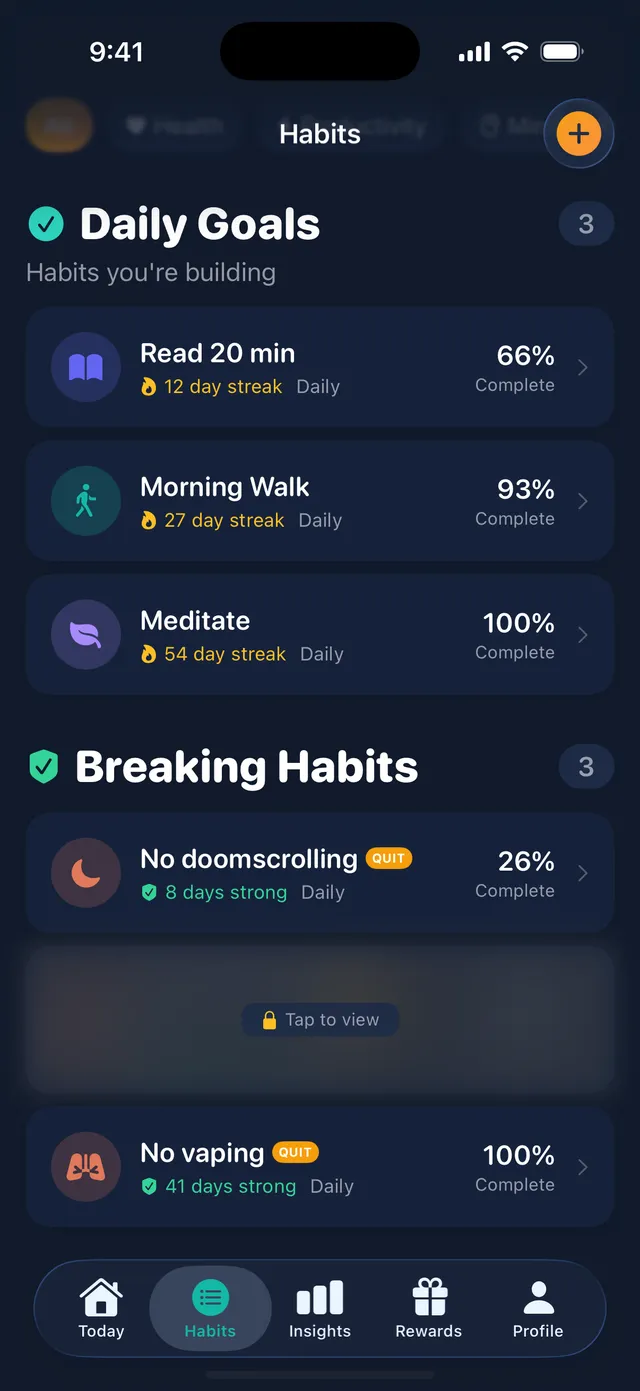
Your progress stays yours.
Sleep is one of the most personal things you can track, and Unlooped treats it that way. Every night you log, every wind-down reminder, and every streak you build stays on your iPhone, with no account to create and no server quietly collecting your patterns. There is no social feed, no leaderboard, and no one watching whether you kept your bedtime or not, so you can be honest with yourself without performing for anyone. Turn on iCloud sync and your history stays inside your own private iCloud; lock the habit behind Face ID with Premium and even someone holding your phone cannot open it. We genuinely cannot see what you track, and that is the point.
Sleep: frequently asked questions
Related guides
Practical, judgment-free reading on sleep and the habits around it.
How to build a consistent sleep schedule
A regular sleep schedule is one of the hardest habits to establish because your body fights back. Circadian rhythms take weeks to shift. Social...
Best habit tracker for first responders
A habit tracker guide for first responders: apps that flex around rotating shifts, protect your sleep and your privacy, and support real decompression.
Best habit tracker for new parents
New parents don't need another app tracking their every move. You need something that works when you're running on two hours of sleep and your phone is...
Best habit tracker for a sleep routine
Building a sleep routine isn't about perfection. It's about noticing patterns, adjusting when things don't work, and finding what actually fits your...
Best habit tracker for shift workers
Rotating schedules, unpredictable sleep patterns, and constantly changing routines make traditional habit trackers feel like they were built for...
How to build a tidy-up-before-bed habit
Your brain treats bedtime as a transition, not a task window. After a full day, decision fatigue is real. You're also fighting inertia: moving from...
Start today, privately.
Download Unlooped and take control of your sleep journey.