
Quit caffeine, calmly.
Cutting caffeine is tougher than a cup of coffee makes it look.
The headaches, the foggy afternoons, and the pull of your morning ritual are all real. Unlooped helps you cut back at your own pace and watch the progress add up, quietly.

How Unlooped helps
Count caffeine-free days
Watch each day add up, whether you cut all at once or step down one cup at a time.
Taper at your own pace
Log where you are each day and see the number come down on a schedule you set, not one the app picks.
See your sleep settle
Jot how you slept as the caffeine clears, and let your own log show the connection over time.
A coach for the 3pm dip
Talk through the afternoon slump and the morning-ritual pull with a coach that runs on your phone.
What the first week off caffeine usually feels like
Caffeine is a stimulant your brain adapts to, so taking it away leaves a gap for a few days. Withdrawal often starts 12 to 24 hours after your usual dose, when a dull headache, tiredness, low mood, and trouble focusing tend to show up. For most people these symptoms peak in the first day or two and then ease, with the worst of it usually behind you within a week or so. Everyone is different and this is a general pattern rather than medical advice, but knowing the rough shape makes a foggy morning easier to sit with.
Unlooped marks these days as you pass them, so the stretch stops feeling open ended. Seeing Day 2 or Day 7 on your own counter reframes a headache as a stage you are moving through instead of a sign that quitting is not for you. The timeline becomes something to lean on rather than guess at.
Tapering versus going cold turkey
There are two common ways to cut caffeine, and neither is wrong. Going cold turkey is the fastest, but the withdrawal lands all at once, which is why the headache can be sharp. Tapering means stepping down gradually, dropping a cup or a half cup every few days, or blending in decaf, so your brain adjusts in smaller increments. A gentler slope often means a milder headache, or sometimes none at all.
A taper is usually the kinder route if you are caffeine sensitive or have had rough withdrawals before, while cold turkey suits people who would rather get it over with. Unlooped works either way: you log how much you had each day, and the app keeps the count and draws the line coming down. You set the pace; it just makes the progress visible.
The upside: steadier sleep and calmer energy
Caffeine has a long half-life, often five to six hours, which means an afternoon coffee can still be active at bedtime and quietly fragment your sleep without you connecting the two. As it clears your system, many people report falling asleep faster and waking less through the night. This is a general pattern, not medical advice, but better sleep is one of the most common reasons people are glad they cut back.
There is a daytime payoff too. Instead of the spike and crash that pulls you toward the next cup, energy tends to flatten into something steadier, with fewer hard afternoon dips. Unlooped lets you note how you slept and felt each day, so the link between cutting caffeine and feeling more even is something you can see in your own log rather than take on faith.
The morning ritual, the afternoon dip, and the meeting coffee
Most caffeine is ritual, not need. The first cup is tied to waking up, the second to the mid-morning lull, and a third often arrives with the 3pm dip or whatever meeting hands you one. Once you notice the cue rather than the craving, you can plan a swap in advance: herbal tea, a glass of water, a short walk, or simply waiting out the slump you now expect.
And if you slip, you have not undone anything. Logging an unplanned coffee in Unlooped is a neutral act: you record it, note what led to it, and your history stays intact. Progress here is milestone-based, so one cup is a single data point in a longer trend, not a failure that wipes the board. That honest, shame-free framing makes it far easier to get back on track the same day.
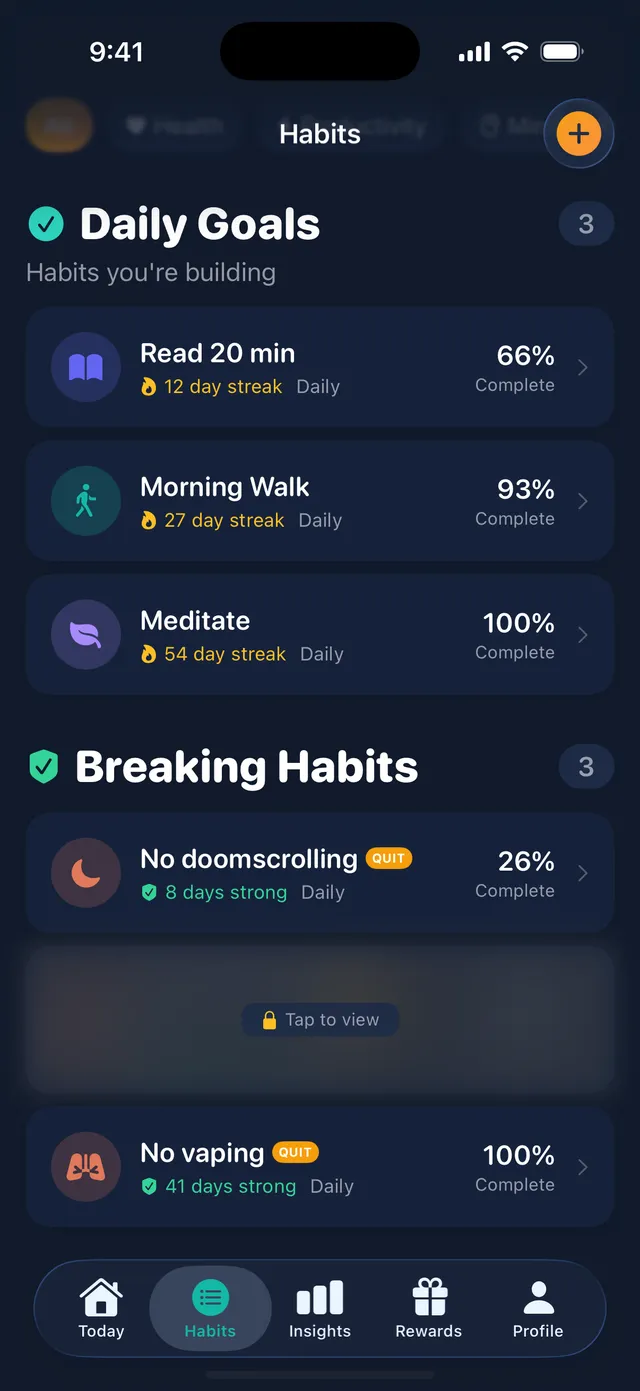
Your progress stays yours.
Cutting caffeine may feel low stakes next to other habits, but your data gets the same care all the same. Your caffeine-free count, every cup you log, your notes on sleep and energy, and any chat with the on-device coach live on your iPhone, with no accounts to sign up for and no servers holding your history. If you want it hidden, lock the habit behind Face ID and it stays out of view even on an unlocked phone. The only sync is the optional private iCloud kind, which moves data between your own devices and nowhere else. We genuinely cannot see what you track, because it was never sent to us.
Caffeine: frequently asked questions
Related guides
Practical, judgment-free reading on caffeine and the habits around it.
How to quit coffee
Caffeine creates dependence and the morning cup is ritual, so quitting coffee cold brings headaches and fatigue. A gentle taper and swaps make it doable.
How to quit energy drinks
Energy drinks pair a caffeine and sugar hit with a ritual your brain expects, then hand you an afternoon crash. How to quit them and ride out the crash.
Best habit tracker for people reducing caffeine
Cutting back on caffeine isn't about willpower. It's about noticing patterns, building new routines, and being honest when things don't go as planned....
Caffeine withdrawal timeline: what to expect
An hour by hour and day by day map of caffeine withdrawal, when the headache peaks, how long it all lasts, and whether to taper or stop at once.
Cold turkey vs tapering: which quit method works
Cold turkey or tapering: what evidence and experience suggest for nicotine, caffeine, and screens, who suits each method, and the one thing every quit needs.
How to quit diet soda
Diet soda feels harmless, which is what makes a multi-can-a-day habit easy to keep. How to quit diet soda and handle the caffeine and ritual behind it.
Start today, privately.
Download Unlooped and take control of your caffeine journey.