
Stop eating junk food, privately.
Cutting back on junk food is harder than willpower alone.
The cravings are real and the late-night reach for something salty or sweet is a habit, not a character flaw. Unlooped helps you track the days you skip it without anyone watching or judging.

How Unlooped helps
Count clean-eating days
Watch your streak grow. Every day you skip the takeout run or the snack drawer is a day worth marking.
See money saved on takeout
Delivery fees and impulse snacks add up fast. Tell Unlooped what you used to spend and watch the savings climb.
Private coach for cravings
Talk through a 9pm urge with a coach that runs entirely on your device. No food diary shared with anyone.
Log a slip without a reset
One bad meal does not erase your week. Record it, learn the trigger, and keep your overall progress intact.
Why junk food is so hard to put down
Ultra-processed food is built to be easy to keep eating. The combination of salt, sugar, and fat hits a reward response that whole foods rarely match, and the convenience does the rest: it is fast, cheap, always within reach, and engineered to taste good in the first three bites and still pull you back for more. That is design, not a failure of self-control on your part.
The encouraging part is that the pull tends to soften as you cut back. When you stop chasing the same intensity every day, your palate slowly recalibrates and ordinary food starts to register again, so the cravings that felt constant in week one usually arrive less often and with less force by week three or four. Everyone is different and this is a general pattern rather than medical advice, but knowing the urge is meant to fade makes the early days easier to sit through.
The money, made concrete
Junk food drains your wallet one tap at a time, which is exactly why it is easy to miss. As an illustration: ordering delivery four nights a week at around $14 a meal is roughly $56 a week, close to $240 a month, and near $2,900 across a year, and that is before you add the daily $5 of gas-station snacks. Plug in your own habit and the number shifts, but the shape holds: a steady leak that a streak counter turns into a visible, growing total.
Unlooped treats the money view as a motivational mirror, not a promise. It multiplies what you tell it you used to spend by the days you have stayed off the junk, so the figure reflects your real habit instead of an average. Watching that total rise gives a tired Thursday something concrete to weigh against the urge to order in.
Spotting the moments that pull you back
Most junk-food runs are not really about hunger, they are about a cue. Late nights are the classic one: the house is quiet, your guard is down, and the snack cupboard is closer than your better judgment. Stress is another, a hard day that wants a fast hit of comfort, and so is being plain tired, when convenience beats cooking every time. Add social settings and the one-tap ease of delivery apps and the cues stack up quickly.
When you log a craving or a slip in Unlooped, you are quietly building a map of these patterns. Over a couple of weeks the map starts to answer back: maybe your urges cluster after 9pm, or only on stressful workdays, or every time the delivery app sends a notification. Naming the trigger is the first step to planning around it (a glass of water, an earlier dinner, deleting the app off your home screen) instead of being caught off guard.
One meal is not a reset
Eating better is rarely a straight line, and a single junk-food meal is not the same as starting over. The all-or-nothing story, "I already blew it today, so I might as well keep going," is what turns one slice into a whole weekend. Unlooped is built to reject that story. Logging a setback here is a neutral act: you record what you ate, what led up to it, and you keep your history instead of wiping it.
Your overall progress, the days you banked, and the triggers you have learned all stay intact. A setback becomes one data point in a longer trend, not a reason to give up on the goal. Because the app is milestone-based, an honest, shame-free log makes it far easier to get back on track at the next meal rather than waiting to "start fresh on Monday."
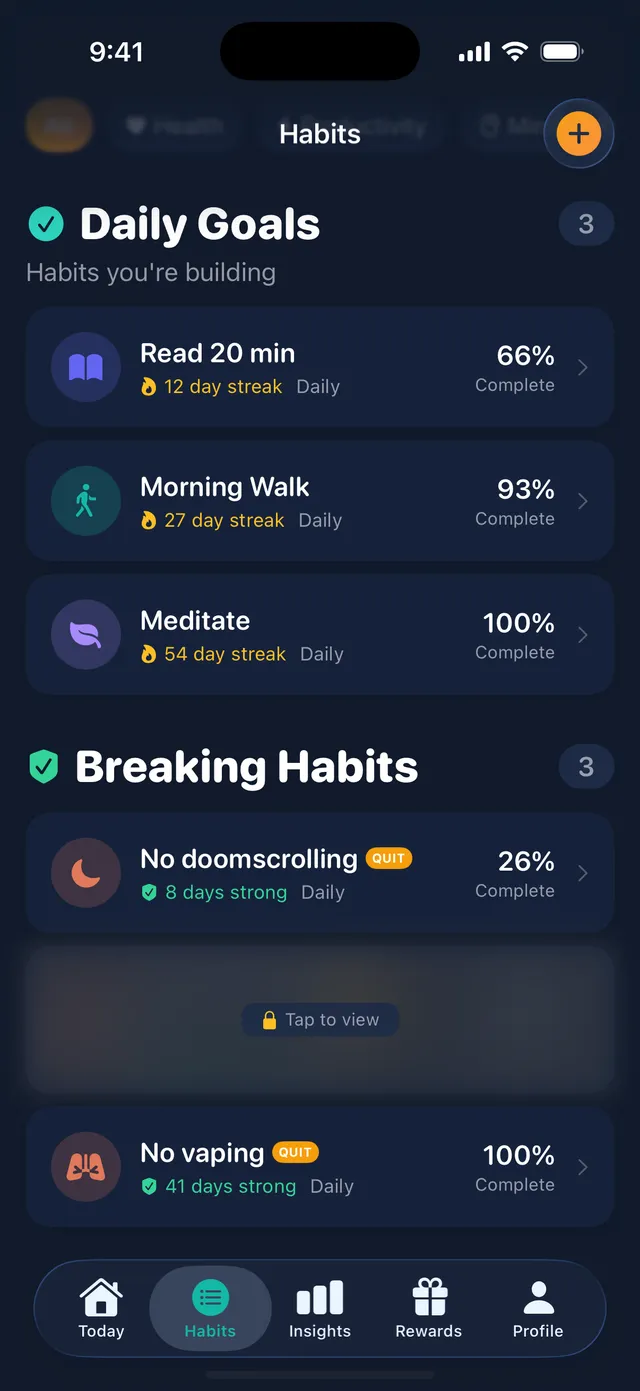
Your progress stays yours.
Food habits can feel deeply personal, and Unlooped is built so your eating stays your business alone. Your clean-eating count, every logged craving, each honest slip, and every message you send to your private coach live on your iPhone, with no accounts, no servers, and no analytics looking over your shoulder. You can lock the junk-food habit behind Face ID so even someone holding your unlocked phone will not stumble into it. Optional private iCloud sync keeps your data between your own devices and never routes it through us. We built it this way on purpose, because the only person who needs to see your progress is you.
Junk food: frequently asked questions
Related guides
Practical, judgment-free reading on junk food and the habits around it.
How to quit fast food
Fast food is engineered to be cheap, fast, and hard to resist, so quitting it is genuinely tough. With swaps, a little prep, and a gradual approach, it...
How to stop emotional eating
Food soothes stress, sadness and boredom, so emotional eating is hard to stop. The HALT check, a pause before you reach and self-compassion help.
How to stop mindless snacking
Mindless snacking is rarely about hunger. It is boredom, stress, and food being within reach. Here is how to break the grazing habit without strict dieting.
Start today, privately.
Download Unlooped and take control of your junk food journey.