
Quit soda, one can at a time.
A can a day does not feel like a habit until you try to skip it.
The lunchtime crack of the tab, the afternoon fizz, the way water feels like a downgrade: it is all real, whether your can is regular or diet. Unlooped counts your soda-free days and the money they leave in your pocket, quietly.

How Unlooped helps
Count soda-free days
Each day without a can gets marked, and milestones land as they stack, whether you stopped cold or are stepping down.
See the can money add up
Tell Unlooped what your daily soda cost, and the money-saved total climbs with every day you skip.
Taper by the can
Log what you actually drank and watch your daily count slope down at a pace you set yourself.
Craving SOS for the fridge pull
When the vending machine or the fridge starts calling, Craving SOS gives you something to do besides open a can.
Why one can a day has such a strong grip
Soda carries the two most habit-forming ingredients a drink can hold: caffeine and sugar. The caffeine delivers a mild lift your brain learns to schedule its afternoon around, and the sugar lands a fast hit of reward right on top of it. That double hook is why a single daily can punches so far above its weight, and why skipping it can feel bigger than it should. The can is also a cue in its own right. Lunch means soda. The drive home means soda. The vending machine on the third floor means soda. After enough repetitions, the craving stops waiting for thirst and simply shows up on schedule, tied to a place and a time of day.
Diet soda skips the sugar and keeps almost everything else. Diet Coke still brings the caffeine, and it brings the full ritual: the cold can, the crack of the tab, the sharp bite of carbonation, the specific taste your afternoon expects. People who quit diet soda are often surprised that the pull barely shrinks, because habit loops run on cue and routine as much as on any single ingredient. That is worth knowing before you start, so a strong craving does not read as a personal failing. Unlooped treats every version of the habit the same way: you name it, count your days, and log the moments the pull shows up, so the pattern behind your particular can becomes something you can see.
Swaps that actually work when the fizz calls
The swap that succeeds most often is the one that keeps the ritual and changes the contents. Sparkling water and flavored seltzer preserve nearly everything the craving is really asking for: something cold, something carbonated, something to open and sip at your desk. Stock them where the soda used to live, at eye level in the fridge, so the reach stays the same and only the label changes. Give it an honest week or two. Seltzer can taste like a downgrade at first, but flavor expectations recalibrate faster than most people expect, and plenty of quitters report that regular soda eventually tastes sweeter than they remembered, almost syrupy. The goal is not to white-knuckle past the fizz. It is to hand the fizz a stand-in.
The second tactic is knowing your moments before they arrive. Soda cravings cluster in predictable slots: lunch, the mid-afternoon slump, the gas station on a long drive, pizza night. Decide in advance what each slot gets instead, so the choice is already made when the moment lands. When a craving hits anyway, Unlooped's Craving SOS gives you something to do besides open the fridge, and logging the urge takes less time than drinking would have. Over a few weeks those logs turn into a map. Maybe your cans were never about taste at all, but about a break from your desk, and a five-minute walk covers the same need. You cannot plan around a pattern you have not seen, and the log is how you see it.
The quiet payoffs: teeth, energy, sleep, and visible money
The benefits of dropping soda mostly arrive without fanfare, which is exactly why tracking helps. Regular soda washes your teeth in sugar and acid several times a day, so stepping away gives your enamel a rest it never got. The spike-and-crash cycle that a sugary can sets off tends to flatten into steadier energy across the afternoon. And if your soda was caffeinated, especially the one you drank with dinner, cutting it often makes falling asleep easier. Bodies differ, and this is a general pattern rather than medical advice, but these are the changes people mention most once the habit loosens. None of them announce themselves on any single day, which is why a note in your log is how you catch them happening.
Money is the payoff you do not have to wait for. A can from the vending machine or a bottle with lunch feels like pocket change, but a daily soda is a subscription you never signed up for, and it bills every single day. Unlooped makes the total visible: tell it what your habit cost per day, and the money-saved counter climbs with every can you skip. Watching that number grow does something a vague intention cannot. It turns each skipped soda into a deposit you can point to, and it gives the harder afternoons a concrete answer to the question of whether this is worth it. Plenty of people keep the counter on a home screen widget for exactly that reason.
Tapering one can at a time, and what a slip actually means
You do not have to quit soda in one dramatic move. Tapering works, and with soda it has a natural unit: the can. Go from three a day to two and hold there for a week. Then two to one. Then one to a few per week, then none. Dropping the least attached can first, often the mindless mid-morning one, leaves your favorite for last and makes the early steps feel easy. The gradual slope also lets the caffeine side of the habit come down gently instead of all at once. In Unlooped you simply log what you drank each day, and the app draws the line coming down at whatever pace you picked, with milestones landing along the way.
A slip will probably happen: a soda at a cookout, a fountain drink on a road trip because it was the only cold thing for miles. What matters is what the slip means, and in Unlooped it means very little. You log it, add a note about the situation, and your history stays exactly as it was. Progress here is milestone-based, so one can is a data point inside a trend that still slopes the right way, not a reset button on weeks of effort. That framing is not a consolation prize. People who treat slips as information get back on track faster than people who treat them as proof, and the log is what makes the information version possible.
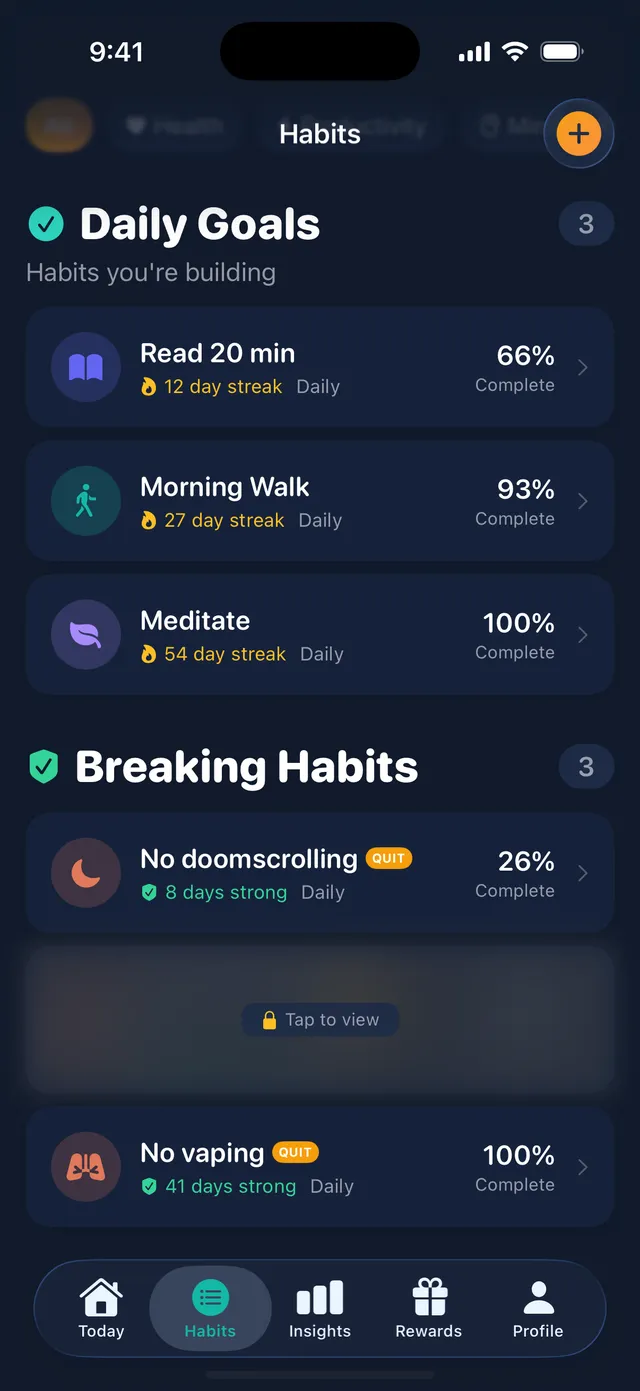
Your progress stays yours.
Quitting soda is not a secret most people guard, but it invites more commentary than you might want: coworkers who notice the seltzer, family who ask how the health kick is going. Unlooped keeps the whole effort yours. Your day count, your can-by-can taper log, the money total, and anything you tell the AI coach are stored on your iPhone and processed there, never on a server, because there are no servers and no account behind any of it. Add Face ID lock and the habit stays hidden even when your phone is open on the table. Optional iCloud sync is private and moves data only between your own devices. We could not read your log if we tried.
Soda: frequently asked questions
Related guides
Practical, judgment-free reading on soda and the habits around it.
How to quit diet soda
Diet soda feels harmless, which is what makes a multi-can-a-day habit easy to keep. How to quit diet soda and handle the caffeine and ritual behind it.
How to quit soda
Quitting soda sounds simple until the afternoon craving hits. Sugar, caffeine and a fizzy ritual give it several hooks. How to break each one.
Start today, privately.
Download Unlooped and take control of your soda journey.